
Loyalty program
2021
Context
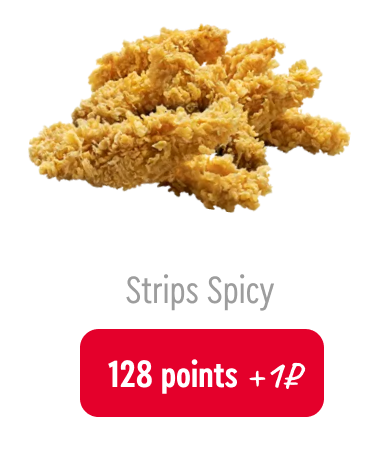
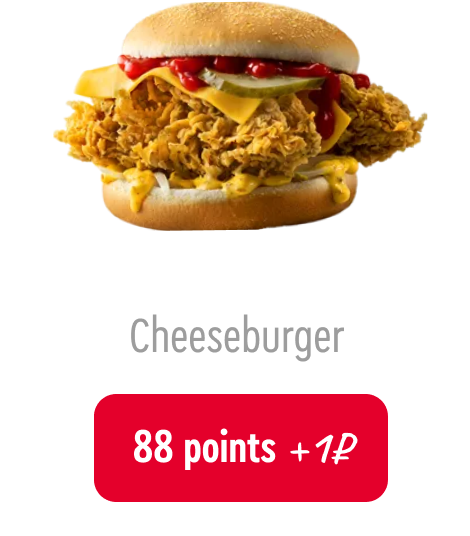
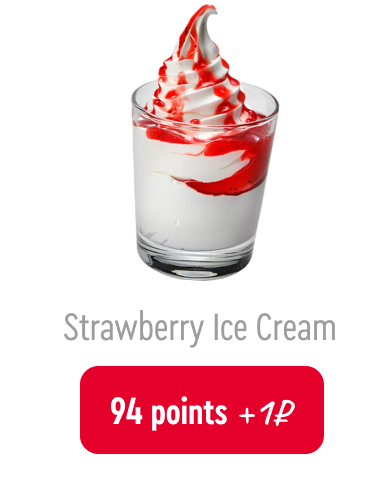
Until 2022, KFC Russia did not have a loyalty program. This large-scale project covered all the company’s digital platforms. The main condition of the program was that users could accumulate points only for dishes from a predefined list, and it was not allowed to deduct points from the total purchase amount.
Our team faced the ambitious task of developing a Minimum Viable Product (MVP) that would also meet key success metrics — Enrollment Rate, Engagement Rate, and Average Revenue Per User.
-
Project Type
B2C
-
Project Timeline
5 months
-
My Role
Senior UX Designer
-
Project Stack
Figma, Notion, Miro
Metrics
Development of the loyalty program logic for the KFC app and self-service terminals from scratch. Business metrics are Enrollment Rate, Engagement Rate, and Average Revenue Per User.
Constraints
- Rules.
The core rules of the program, determined by business planning, were non-negotiable. - Timing.
We had only 5 months for research, testing, and final design development. - Design.
We worked within the corporate style of the loyalty program developed by the brand team.
Research
- Broad analysis.
We analyzed loyalty programs not only from direct but also indirect competitors. Surveys showed that we shouldn’t limit ourselves to the restaurant industry. So, we expanded our scope to include hypermarkets, online stores, banks, and ecosystems. - In-depth Interviews.
We conducted 34 interviews to understand the key user needs, engagement triggers, barriers, best practices, and how users behave at different stages of interacting with loyalty programs. - Mindsets.
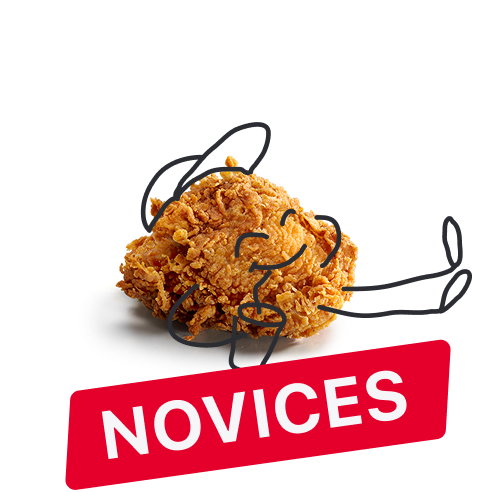
As a result, we identified three behavioral mindsets: "Novices" — users just starting to explore loyalty programs; "Value Seekers" — those focused on maximizing savings and benefits; and "Connoisseurs" — users who appreciate exclusivity and unique offers. - Usability testing.
We ran over 100 usability tests across various parts of the loyalty program flow. In the end, we built a logic that worked without critical errors, as confirmed by the test results.
Mindsets
Joining the Program
They perceive loyalty programs as effortless: "It costs me nothing." Most often, they agree to join the program after a suggestion from a store or restaurant employee, regardless of how frequently they visit. They don’t bother learning the details, rules, or filling out forms. For them, joining a loyalty program feels more like entertainment than a conscious decision.
Maintaining Engagement
They quickly lose interest and often forget they are even part of the program. To keep them engaged, the following approaches work well:
- Reminders. Regular notifications about the program and opportunities to use it, especially during the ordering process, such as when reviewing the order details before payment.
- Interactive elements. During interviews, they often mentioned that interactive elements, such as an animation mimicking a tear-off sticker, enhanced their experience and left a positive impression.
Sustained Usage
Their use of the program is periodic, lasting until they lose interest. Loyalty programs are unlikely to be the main reason for repeat purchases, but they can help increase the average order value.
Joining the Program
They only join loyalty programs for services they use regularly. They take the time to read the terms and figure out how to get the most out of the program. Their main goal is to save money on everyday purchases like food or groceries.
Maintaining Engagement
They’re highly engaged as long as the program offers discounts on their favorite items. They keep a close eye on their points balance and tend to redeem them regularly, but only when the amount feels significant. They’re skeptical about companies and often worry that their points might expire or disappear. Reminders about points during checkout can reassure them that the program really helps them save money.
Sustained Usage
They stick with the program as long as it works for them and helps them save. A good loyalty program is often the key reason they keep coming back. However, if they find better discounts elsewhere, they won’t hesitate to switch to another service.
Joining the Program
They are enthusiastic about joining loyalty programs for their preferred services. While saving money isn’t their primary motivation, they appreciate rewards as a thoughtful gesture and recognition of their loyalty. Even without discounts, they are likely to remain loyal customers if the service meets their expectations.
Maintaining Engagement
They may not always actively think about the loyalty program since their main focus is on the quality of the food or products they would purchase regardless. Regular reminders about their participation or accumulated rewards can help maintain their engagement. They tend to either save points for a more substantial reward or redeem them when the balance feels meaningful.
Sustained Usage
A loyalty program enhances their overall connection to the service but isn’t the determining factor for continued usage. As long as the service delivers on quality and aligns with their expectations, they will remain customers. However, if the quality significantly declines or their needs are no longer met, they may consider switching to an alternative.


Problems and solutions
Displaying Points
Research showed that users find it important to regularly track their points. Some respondents even installed the app just for this feature. We decided to add a widget on the homepage to show the current balance.
We decided to always keep visible the dishes users can get with their points. Even if some dishes are temporarily unavailable or not offered at the selected restaurant, we show all the items participating in the loyalty program.


The widget focuses on the number of points, but we also included an informational line. By default, it displays the expiration date of the points, but it can also inform users about technical issues or the processing time for points after a purchase. We always keep users updated on the status of their points.

For mindsets:


Dish Selection
We faced the challenge of figuring out how to correctly redeem points for dishes, given that the program only allows points to be used on a limited selection of items. While designing the flow for redeeming one dish per purchase, we went through five iterations of testing to fix any interface issues. Eventually, we settled on a unified space for the loyalty program in "Chicken Club," where users can see their points balance and the dishes they can redeem points for.

For mindsets:


Saving on the Cart
A large portion of our users are “Novices”. In interviews, respondents often mentioned that they forget about loyalty programs and feel disappointed when discounts are offered only after a purchase.
To address this, we developed a unique feature. If a user has enough points and adds an item to their cart that can be paid for with points, we notify them about it. The loyalty program reminder appears at the most crucial moment — at checkout.
For mindsets:

While working on the loyalty program, we also improved the recommendation conversion flow in the cart. We combined this block with information about how close the user is to earning a higher points multiplier. It may seem like a small detail, but this reminder worked really well for "thrifty" users, as it clearly demonstrated the benefits of an additional purchase. This small tweak helped increase the sales of recommended items by 13%.
Results
We conducted over 100 usability tests on different parts of the loyalty program flow and refined the logic until there were no critical errors in the tests. Throughout the entire lifecycle of the loyalty program, we didn’t receive a single support ticket related to app logic — which is a huge point of pride for me and my team. After the release, we also tested with real users, and no critical issues were found. Of course, there’s still room for improvement, but the working MVP version exceeded all expectations. As a result, we fully met our goals for key metrics, and as a nice bonus, we increased sales in the recommendations section by 13%.