
App
Queates is an American startup that offers parents healthy lunchbox recipes for their kids.
2024
Context
The trend of healthy eating, especially for children, is undeniable. However, many people believe that healthy eating takes a lot of time, especially when you're a parent already juggling a busy schedule. At Queates, in collaboration with a professional nutritionist, we've curated recipes that are quick and easy to prepare, while also ensuring they meet the necessary balance of macronutrients (carbohydrates, fats, and proteins) for the child’s health.
The app has two major sections: the first is a recipe showcase available to all users, and the second is a meal planning service for the school week, personalized for each user's child. This second section is available via subscription.
-
Project Type
B2С
-
Project Timeline
2 months
-
My Role
Senior UX Designer
-
Project Stack
Figma, Notion, Miro
Limitations and metrics
As a startup, our goal was to launch as quickly as possible to grow our customer base. However, speed should not compromise quality. We didn’t want to launch an MVP, since the foodtech industry is highly competitive. Our goal was to create an MLP (Minimum Lovable Product) instead.
I collected data on levels of user experience, specifically focusing on hygiene, triggers, barriers, benchmarks, and native use. We discussed many topics: their routines during the school week, how they plan meals, how they shop, and what they focus on when preparing lunchboxes for their kids.
Interview
After analyzing competitors, studying the principles of healthy eating, and reading hundreds of parent discussions on children's meal planning, I was ready to conduct interviews. I spoke with 22 parents from different states and lifestyles.

Research
For a new feature, especially for an entirely new service, it is essential to conduct user research and follow the design process.

Even with time constraints, it is possible to carry out thorough research. I managed to complete it within 10 working days.
Mindsets
As a result of the research, I identified two main mindsets: “go with the flow” and “goal-oriented”.
Mindsets
Go with the flow
These are parents who enjoy the process of cooking and parenting in general. They don’t track calories or fiber in their child’s lunchbox. However, like any parent, they want their child’s diet to be healthy and balanced. They mentioned that they estimate protein levels by eye and add more cheese or chicken when needed. While they would like to know the exact required amounts of food, they’re not ready to track or record their child's intake.
They don’t use scales and often improvise while cooking. Parents in this mindset often watch lunchbox videos on TikTok and try to replicate creative recipes.
Goal-oriented
Parents in this mindset are the direct opposite of "Go with the flow." For them, preparing food for their child is a task they approach with maximum responsibility. Every meal is carefully planned, and fiber, protein, and carbs are weighed and calculated. These parents may keep a food diary for their child or remember what was eaten the previous day and adjust future meals to balance the child’s nutrition. Any deviation from a recipe or substitution of ingredients is not acceptable. If a recipe specifies a weight, it’s considered crucial to meet nutritional needs and should never be changed.
Since Queates is a startup and its audience is just beginning to form, we couldn’t target a specific mindset. It was essential to develop solutions that cater to all user segments.
Problems and solutions
Dish and Recipe List
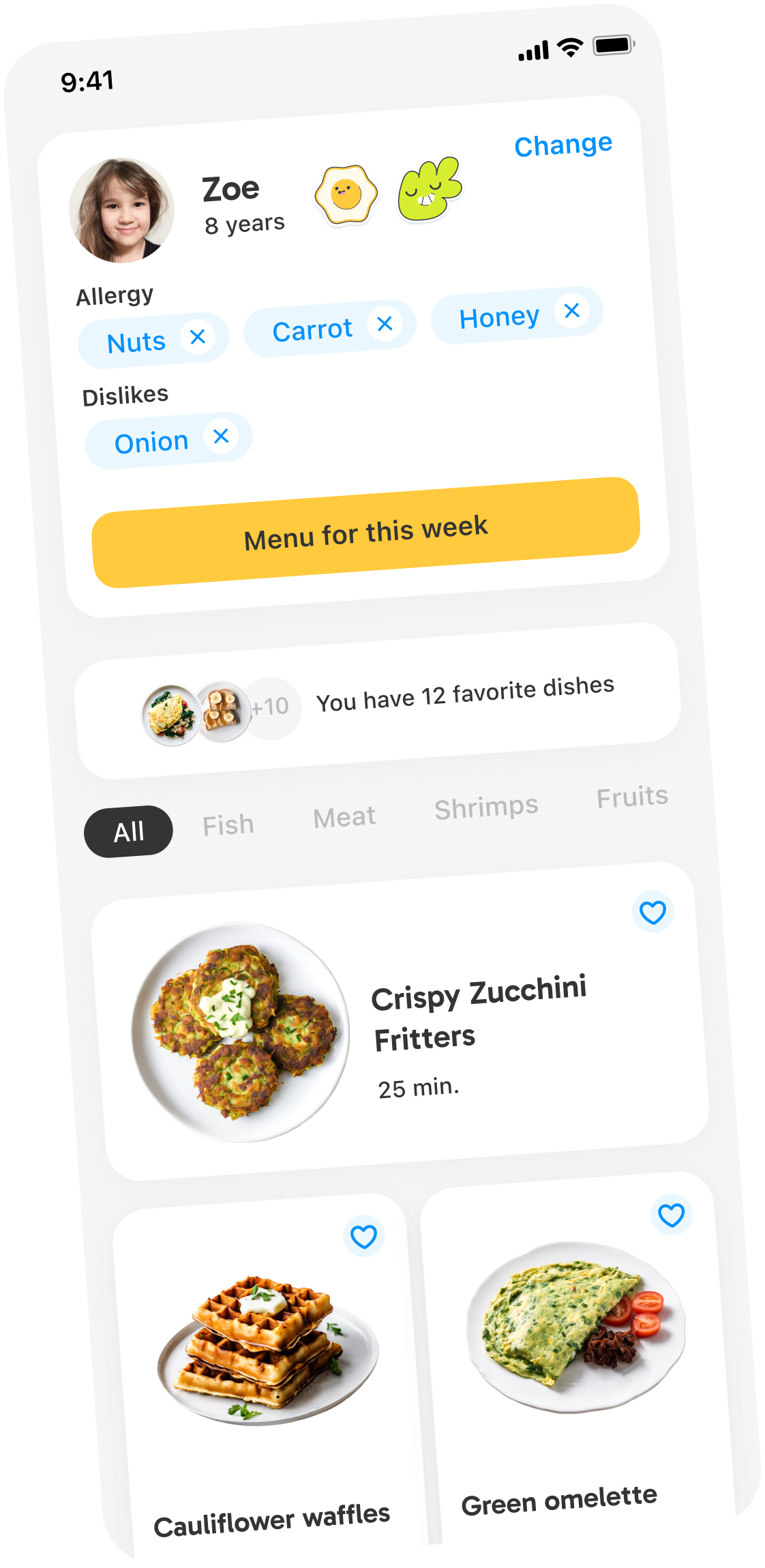
We display an endless feed of recipes tailored to the child’s preferences if selected, or in the order we deem appropriate. We showcase seasonal dishes, new arrivals, or popular recipes. Dishes that seem most interesting can be added to the "Favorites" section.
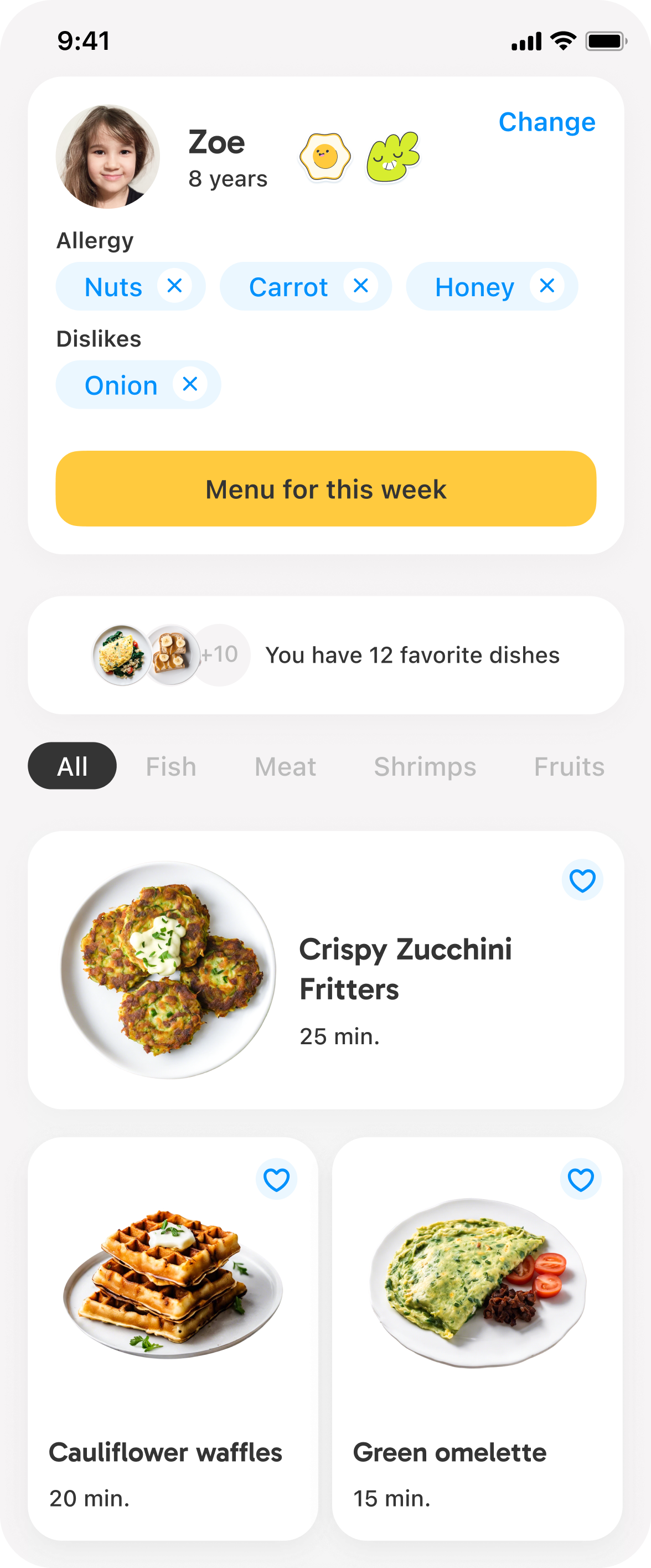

To diversify the content in the feed, there are four types of recipe cards, including quick meal options, themed meals, and lunchbox-friendly recipes. Additionally, we feature categories like seasonal ingredients, story-based recommendations, and lunchbox meals, offering a variety of nutritious and fun options for parents to choose from.




Weekly Meal Planning
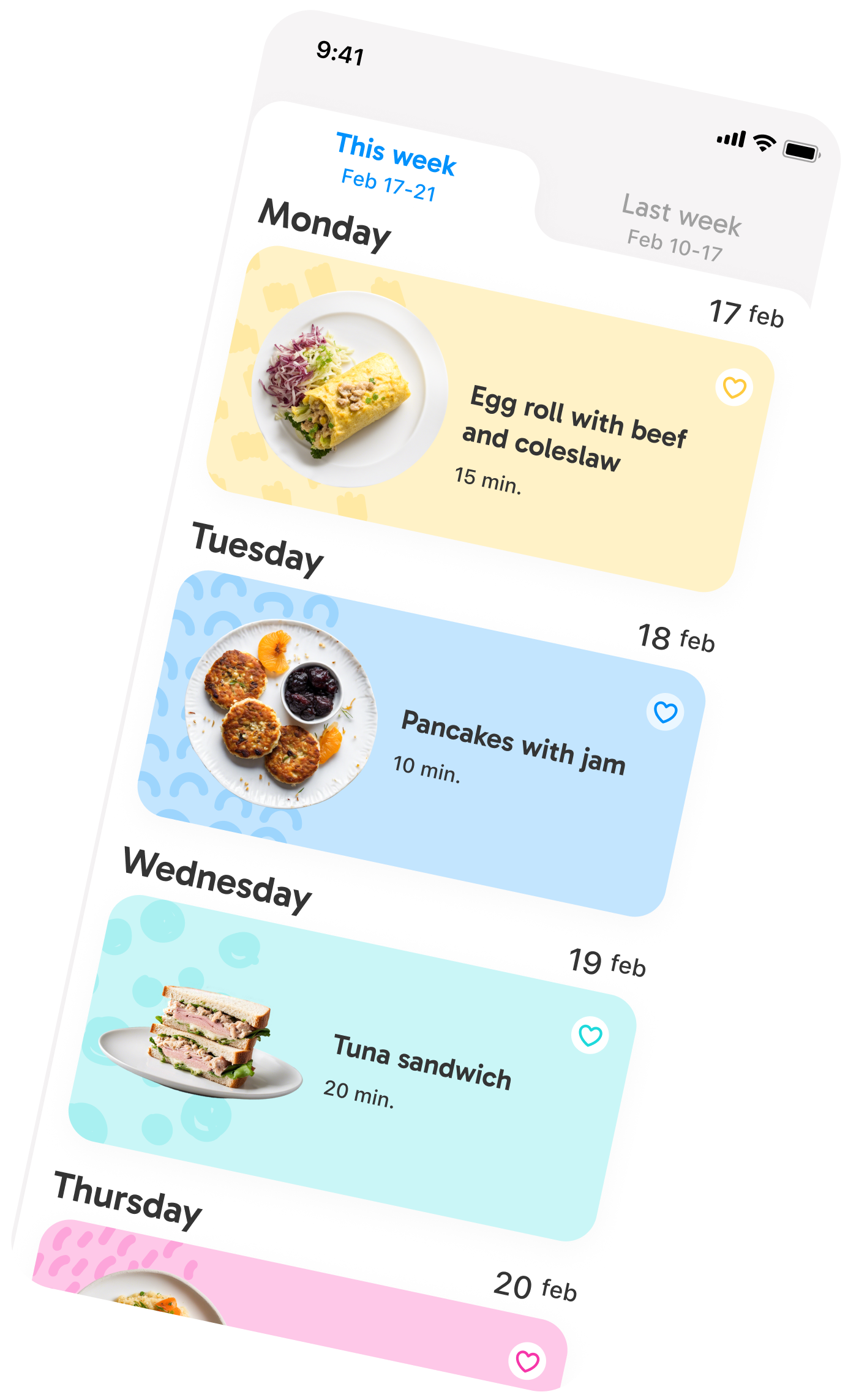
From the start, we understood that the main feature of our app is not just a recipe feed but a curated menu for the school week. Our hypothesis was confirmed: for both mindsets, having a pre-made menu is more important than scrolling through all the recipes. The main goal of the feed is to gather data for building the weekly menu. We consider: likes on recipes, allergens the child has, and foods the child dislikes.
For the "Go with the flow" mindset, we offer several topping options for each dish, leaving room for improvisation during cooking.


Personalized Recipe Collections for Kids
Regardless of the mindset, every parent must consider their child’s taste preferences. Parents mentioned that if their child doesn’t like carrots, they simply replace them with beets, for example, but won’t force the child to eat vegetables they dislike. When it comes to allergens, taking the child’s specific needs into account is crucial.
For this key functionality, we created two entry points for our users:

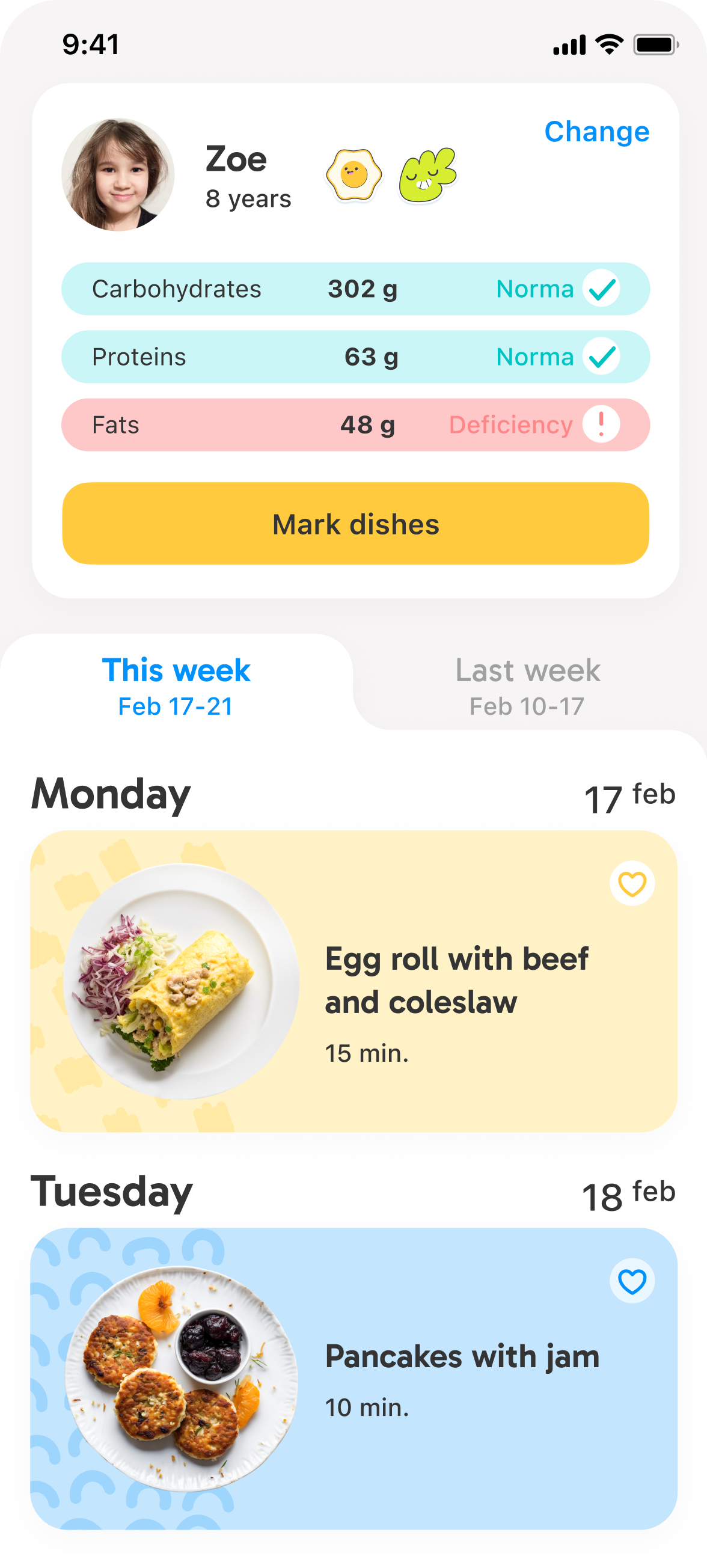
The second entry point is the child’s widget on the main screen. During our research, we found that personal settings for the child and taking their needs into account is the most important feature we can offer our users. Parents are less interested in just the recipes; they care more about tracking their child’s diet. Therefore, the main focus of the home screen is on personal settings.

The first is onboarding after subscribing. In the extended version of the filters, all relevant child-specific details can be set.


Tracking BMR and Nutrient Recommendations
Through conversations with parents, we learned that it’s not just about providing allergen-free recipes but also about tracking what nutrients are missing from their child’s diet. Initially, we didn’t think about this functionality, but after the research, we realized that this is a must-have feature for launching the app and our core offering.
We developed a system for calculating the child’s BMR and highlight which nutrients are missing. We know parents have limited time, so all they need to do is mark what the child ate that day, and we will calculate which items need to be added to the menu.
The deficiencies are shown in the child’s widget, and we adjust the weekly recommendations based on the report from the previous day. Dishes that help compensate for the missing elements are marked with a badge.


But we don’t just highlight the missing items; we also reward our users. For all the vegetables eaten during the week, we award the child an achievement badge.
Parents loved this small but sweet feature.
Results
In three months, we conducted a full-fledged study, made significant changes to the product's functionality, and developed a unique visual style. We ran three iterations of testing, assigning tasks to parents and assessing how clear our flow was for them. Since this is a startup, our main goal was to grow the audience. Within six months of launching, we acquired just over 2,000 registered users.